
LINKS
Photo galleries, articles, websites, resources
(click on titles to go to link)
(click on titles to go to link)
ELDER COHOUSING IN THE US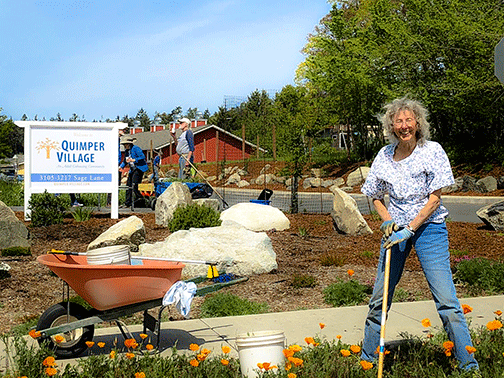
Phyllis, Quimper Village workday, Port Townsend WA
Cohousing communities are an ever-growing phenomenon as people, including seniors, seek community and connection. There are now 29 elder cohousing communities in the US.
Shannon Guzman of the AARP Public Policy Institute states: "Cohousing communities differ from typical subdivisions and condominium developments in the expectation that their residents will contribute to the planning and management of their community. Residents regularly meet to solve problems, develop policy, coordinate community events, and maintain the property. Each person takes on roles consistent with his or her skills and abilities and donates time to maintain the shared facilities. While tasks can be outsourced to contractors, resident labor can lower homeowners’/condo association costs. No one resident has authority over the entire community, and decisions that affect the community are made via consensus. All residents share in the upkeep of common land areas and are not paid for their contributions to the community." READ MORE COHOUSING AT THE COMMONS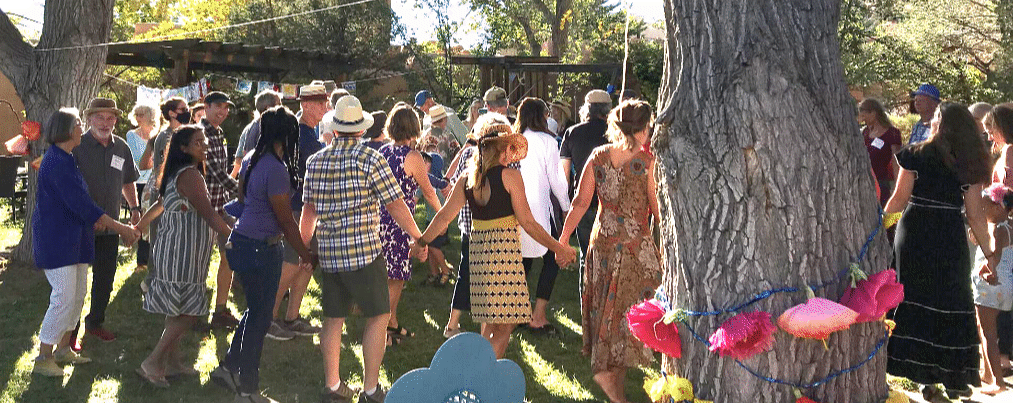
The Cohousing Association of the US says, “Cohousing is community intentionally designed with ample common spaces surrounded by private homes. Collaborative spaces typically include a common house with a large kitchen and dining room, laundry and recreational areas and outdoor walkways, open space, gardens and parking. Neighbors use these spaces to play together, cook for one another, share tools and work collaboratively. Common property is managed and maintained by community members, providing even more opportunities for growing relationships.” READ MORE
"The universe is a community of subjects, not a collection of objects."
—Thomas Berry |
EARLY ELDERGRACE, 2009–2010
Post move-in, ElderGrace residents engage in various work and play activities. (click on title for full gallery)
ELDERGRACE CONSTRUCTION, 2009

Construction was just completed while paths were yet to be stabilized. (click on title for full gallery)
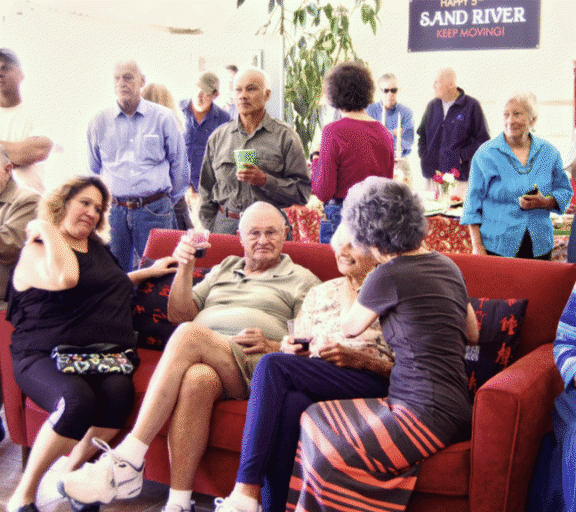
The 2014 fifth anniversary celebration at Sand River, featuring good food, live music, and dancing
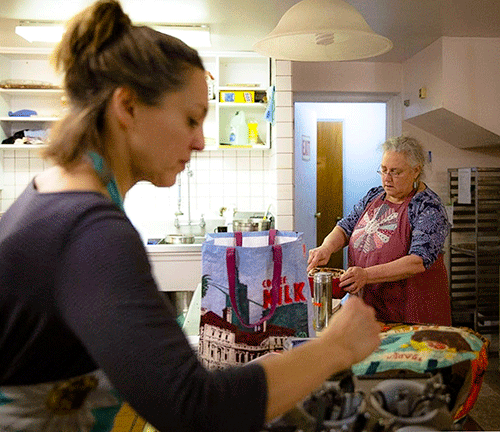
COHOUSING —AN ALTERNATIVE GETTING MORE INTEREST
|
|
|